Surprise me
On Chatroulette, a box of chocolates, and why I’ve started asking for what doesn’t fit.

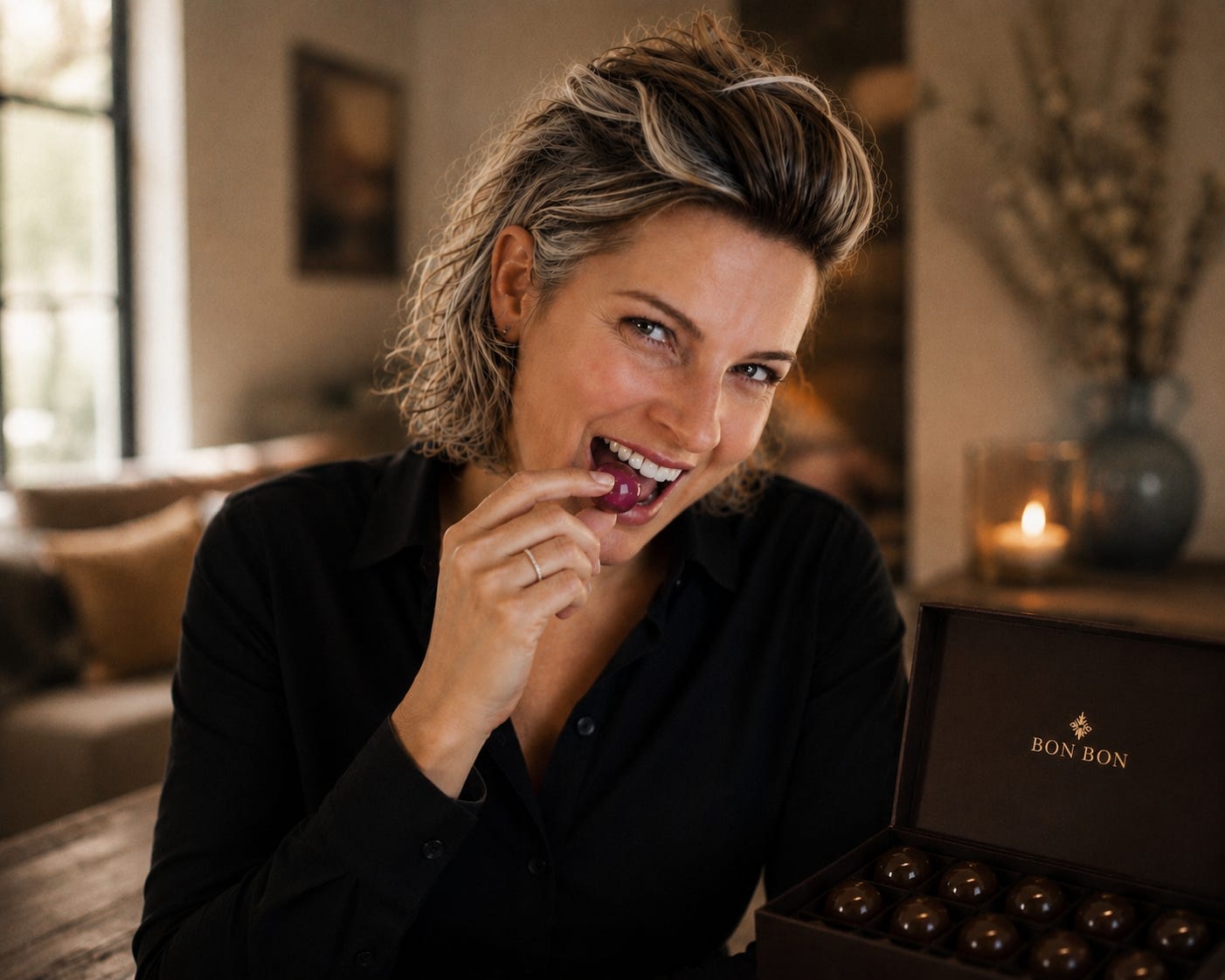
There is a Dutch word I keep coming back to. Kattenkwaad. Literally, cat’s mischief. It’s what children get up to when no adult is looking. Ringing a doorbell and running. Small, harmless trouble. The kind you can only get into when nobody is keeping track of who you are.
I studied a grown-up version of it, years ago.
In 2012 I wrote a paper on Chatroulette during my master’s. If you missed it: you hit a button, your webcam turned on, and you were connected to a stranger somewhere in the world. No login. No account. No profile. You didn’t know them, they didn’t know you, and when you clicked next, you would never see them again.
It should have been bleak. Often it was the opposite. One student suddenly found Robbie Williams on the other end of the line. A man held up Kermit the Frog for hours. A piano player improvised songs about whoever appeared on his screen. People wore masks, costumes, put their cat in front of the camera. Someone made a bingo card of the things you might run into.
And then the other side. The same anonymity that let people play also let people do things they would never do with their name attached. Exhibitionists. The stuff that made the newspapers. One researcher read the whole site through Foucault, all voyeurism and exposure. It wasn’t all hallelujah. The freedom and the ugliness came from exactly the same place: no trace, no name, no one keeping track.
My paper argued something simple. The play came from the randomness. Because you left no trace, because you would never meet again, because no one was building a profile of you, you were free. Free to be silly, to experiment, to find out what you’d do when the usual rules didn’t apply. The same openness that freed the frog freed the worst of it too. That is the deal, not a flaw in it.
I called it the myth in the machine. The unpredictable, human, uncontrollable bit that lives inside the system, as long as the system leaves room for it.
Here is what the media archaeologist in me notices now.
Every technology that promised us more sight made the same promise. Safer, closer, more honest, more known. Each one delivered something real. And each one quietly closed a little of the room where nobody was keeping track. The doorbell got a camera. The chat got a profile.
But AI does something the others didn’t. It doesn’t just watch. It predicts. It knows enough about you to hand you exactly what fits your street, your taste, your existing view. Click, and the next thing confirms what you already thought. There is no Robbie Williams on the line anymore. No frog. No stranger you didn’t choose. Just more of you, reflected back.
Life used to be like a box of chocolates. You never knew what you were going to get. That was the point. Now the box is sorted before it reaches you, and every chocolate is one you’ve already had.
And here is what I think we lose, quietly, without naming it. Without surprise, there is no widening. And it’s in the widening that the good stuff lives. The view that isn’t yours. The person you’d never have picked. The idea that doesn’t fit your street and changes it anyway. That is where richness is. That is where connection is. Not in confirmation. In the thing you didn’t see coming.
So this is a small plea, more than a conclusion.
Leave some room for the random. Take the call you didn’t expect. Read the thing that isn’t aimed at you. Sit next to the person the algorithm would never have matched you with. And when you open the machine that knows you so well, ask it now and then to surprise you, not to confirm you. Not because it’s safe or efficient, it isn’t, but because the surprise is where you grow, and the growing is where you meet each other.
The myth in the machine. The unpredictable, human, uncontrollable bit. We keep building systems with less and less room for it. I’d like us to leave the door open. You never know what you’re going to get. I still think that’s the best part.